
The Immobilizer control module
Speedylock & Key Services provides expert services for the immobilizer control module, a critical component of your vehicle’s security system that prevents unauthorized engine start.
The Immobilizer control module
Speedylock & Key Services provides expert services for the immobilizer control module, a critical component of your vehicle’s security system that prevents unauthorized engine start. This system works by recognizing a coded chip in your key or remote, and without proper communication, the vehicle will not start. Our skilled technicians are equipped to diagnose immobilizer issues, repair faults, and program or reprogram modules to ensure seamless communication between your key and vehicle.
Whether you are experiencing starting problems, have replaced your key, or need a new immobilizer module configured, we offer reliable and efficient solutions for a wide range of vehicle models. Using advanced diagnostic tools, we ensure accurate synchronization and restore full functionality without compromising security. With Speedylock & Key Services, you can trust that your vehicle’s immobilizer system is handled with precision, keeping your car secure and fully operational.
The Immobilizer control module
The immobilizer control module can be a stand-alone component or its function can be integrated into other control modules. It communicates with the antenna ring around the ignition switch and the engine control module (ECM). When the ignition switch is turned to the ON position, a carrier frequency signal is sent to the antenna ring around the ignition lock assembly. Some systems have the ability to adjust the frequency of this signal, up or down, to ensure trouble-free communication without interference from other signals. Engine control module (ECM). The engine control module (ECM) needs special software designed for immobilizer system operation. To enhance security and prevent components from being swapped from another vehicle, the immobilizer control module will only be able to communicate with the ECM that it recognizes and is registered with it from new.
The Immobilizer control module-System operation
When the ignition is switched on and an attempt made to start the engine the ECM sends an unlock request to the immobilizer control module. The immobilizer control module outputs a 100-150kHz carrier wave to the antenna ring. This signal is induced into the transponder. The transponder responds to this induced signal by outputing the key code identification which is transmitted back to the immobilizer control module via the antenna ring. This key code identification is then compared with the stored code in the immobilizer control module memory. At this point the immobilizer control module only recognizes this as one of a series of registered keys. To further increase security, the immobilizer control module transmits a random code to the ECM and the key transponder and requests an algorithmic calculation to be performed. The immobilizer control module also performed. The immobilizer control module also performs this algorithmic calculation independently.
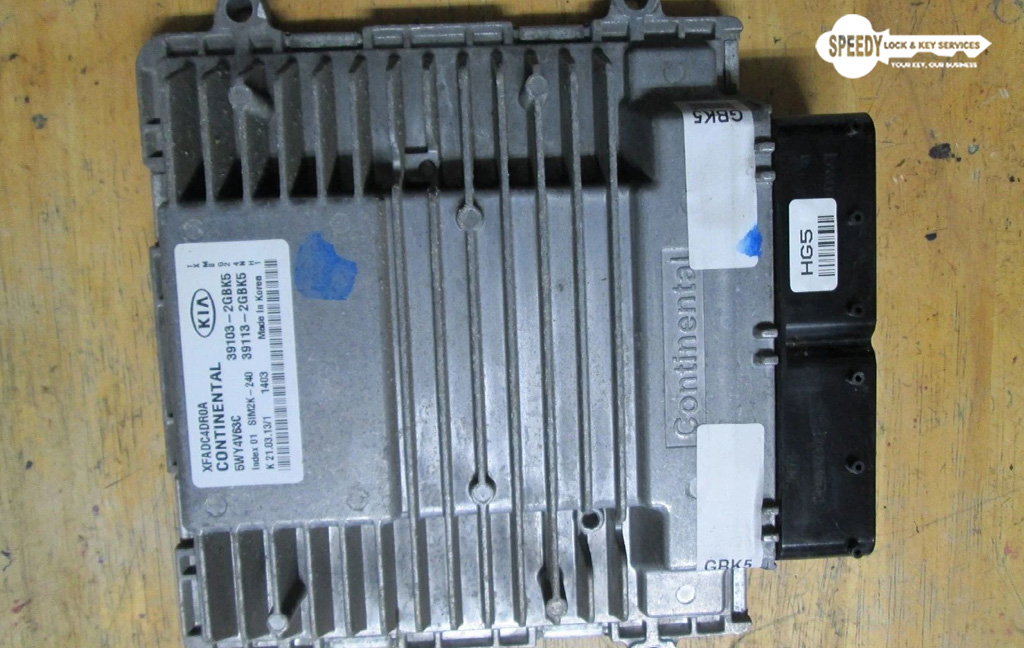
The ECM and key transponder return the answers of the algorithmic calculation to the immobilizer control module. A comparison is made and if they match, the unlock request is granted. If any of the calculations do not match the unlock request is denied, the engine will not start or, if already started, will stop. This authentication procedure happens so quickly that the driver may only be aware of a very slight delay between the key being turned and the engine starting.
The immobilizer system is automatically reset when the ignition is switched off and the key withdrawn from the ignition switch. Many immobilizer systems feature fault memories which can be accessed in various ways e.g. by counting immobilizer warning lamp flashed, bridging data link connector (DLC) terminals with voltmeter or LED tester, or using suitable diagnostic equipment.